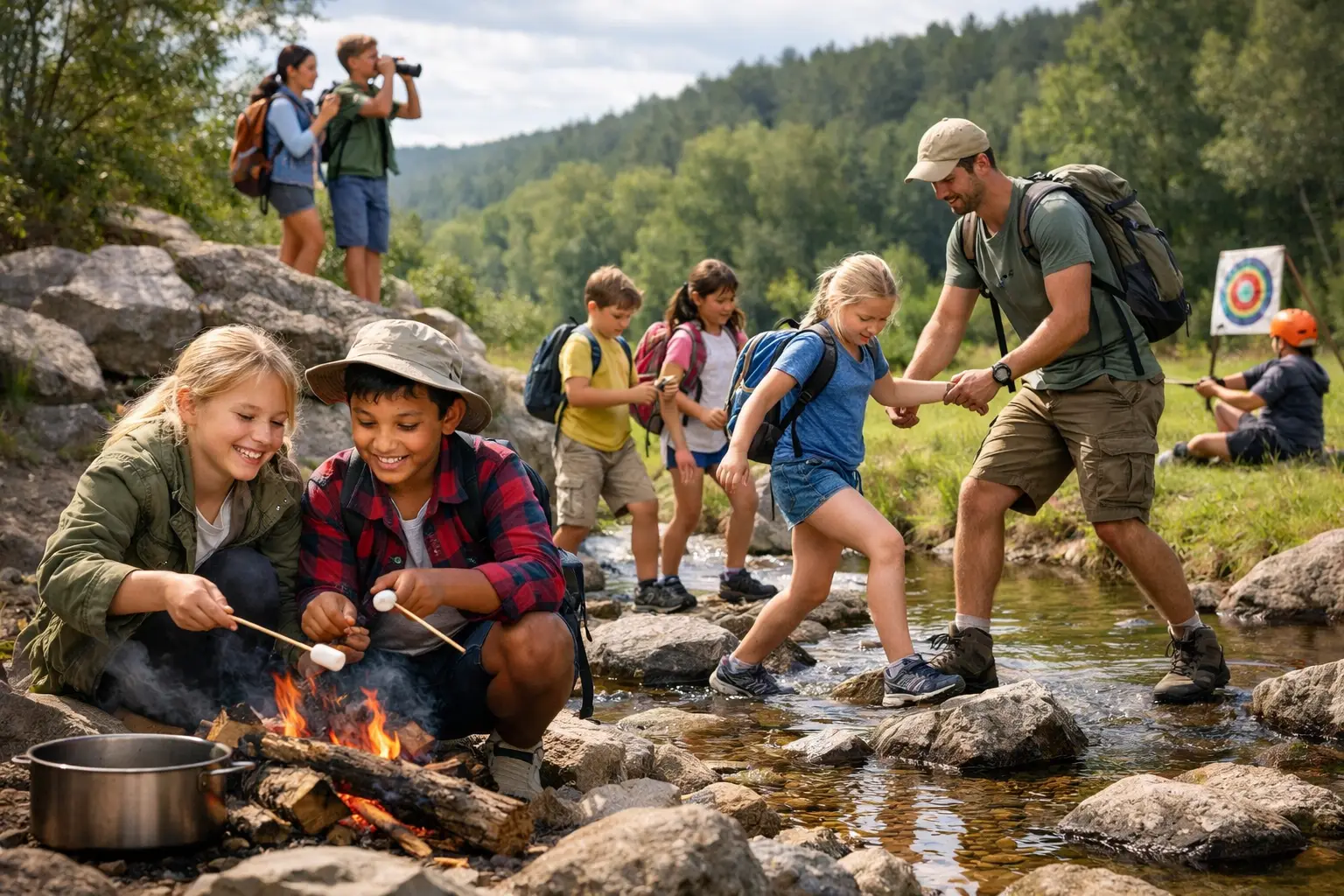
A school trip can go one of two ways. It can be a long day of queues, clipboards and half-hearted engagement, or it can be the kind of trip pupils talk about for weeks afterwards. The best outdoor school trip activities do more than fill a timetable. They get students moving, working together and thinking on their feet, while teachers get a structured day that feels worthwhile as well as enjoyable.
For schools planning a rewarding day out, outdoor activity sessions have a clear advantage. They take pupils out of their usual routine and place them in a setting where communication, resilience and teamwork matter straight away. That change of environment often brings out different strengths, especially in students who may not always shine in the classroom.
Why outdoor school trip activities work so well
There is something powerful about giving a group a shared challenge in the open air. Pupils stop focusing on the usual classroom roles and start reacting to the task in front of them. They need to listen, make quick decisions and support one another. That matters whether you are organising a reward trip, an enrichment day or a wider personal development activity.
Outdoor experiences also tend to be more inclusive than people expect. Not every child wants to stand up and present in front of a class, but plenty will step forward when their team needs a plan. Others who are usually full of energy benefit from having a fast-paced setting where that enthusiasm is an asset rather than a distraction.
That does not mean every activity suits every age group. A primary school reward day needs a different pace and level of challenge from a secondary school trip. The strongest choice is usually the one that balances excitement with structure, and fun with proper supervision.
Choosing the right activity for your year group
When schools compare outdoor school trip activities, it helps to start with the group rather than the activity itself. Age, confidence levels, behaviour profile and learning goals all shape what will work best.
For younger pupils, lower-impact options are often the most effective. They still want action, adventure and a sense of competition, but the activity needs to feel accessible from the moment they arrive. Sessions such as Splatmaster can be ideal here because they give children the thrill of an outdoor battle game in a format designed to be lighter and more approachable.
For older pupils, you can usually introduce more tactical play and a stronger team challenge. Teenagers respond well when there is a real objective, a clear structure and enough pace to keep them fully engaged. Activities like laser tag and paintball can work particularly well for this age group because they combine movement, planning and communication in a way that feels exciting rather than forced.
If your aim is sixth form enrichment or a team-building day for sports squads and school societies, airsoft-style tactical experiences may also appeal, depending on the venue format, age suitability and the school’s own preferences. The key point is that not every action activity is interchangeable. A well-matched session will feel organised, age-appropriate and genuinely memorable.
The value of action-based group activities
There is a reason action-led outdoor sessions remain popular with schools. They naturally create the kind of moments that teachers often try to encourage back in school: leadership, trust, problem solving and staying calm under pressure.
In a paintball or laser tag game, for example, students cannot succeed by acting alone for long. The teams that do well are usually the ones that communicate clearly, cover for each other and adjust their plan as the game develops. That makes the activity feel fun first, but the group benefits are obvious.
This is especially useful for mixed friendship groups, tutor groups or teams where some pupils know each other well and others do not. Shared tasks tend to break down awkwardness quickly. By the second or third game, students are usually talking more, encouraging each other and taking the challenge seriously in the best possible way.
There is also real value in the reset that outdoor activity days can provide. For some pupils, a trip like this is a confidence boost. For others, it is a chance to channel competitiveness positively. For teachers, it can be refreshing to see pupils in a new context where effort, adaptability and teamwork are easier to spot.
Popular outdoor school trip activities for schools
Some activities consistently work well because they combine excitement with a clear format. Paintball is a strong option for older students who enjoy strategy, team play and high-energy scenarios. It creates instant involvement and can turn a standard school trip into a proper shared experience.
Laser tag offers similar pace and teamwork, but it can be a great fit for groups looking for a lower-impact alternative. It keeps the mission-based structure and competitive buzz without the same level of intensity, which suits many schools and youth groups.
Splatmaster is often one of the most useful options for younger participants. It gives pupils a lively, outdoor target game built around movement, teamwork and friendly competition, while remaining suitable for those who may be new to this type of activity.
What makes these formats stand out is not only the action itself. It is the way they are usually delivered. A professionally run session gives schools game briefings, organised rotations, safety equipment and staff oversight throughout the day. That means the excitement stays high without the experience feeling chaotic.
Safety, supervision and what schools should look for
Teachers and trip organisers do not just need an activity that sounds good on paper. They need to know the day will run smoothly. Safety standards, staff experience and clear organisation are not extras – they are central to whether a trip feels manageable.
The first thing to look for is a provider with a structured approach. That includes proper briefings, suitable kit, age-appropriate activity formats and staff who are used to handling school and youth groups. A fast-paced outdoor day should still feel controlled and well managed from start to finish.
It is also worth considering the practical details early on. Group size matters, as does travel time and how the day fits your timetable. A brilliant activity can lose its appeal if the logistics become hard work. This is where venues with broad UK coverage can make a real difference, because schools often have more choice about finding a suitable site within reach.
Teachers should also think about the tone of the session they want. Some groups will thrive on all-out competition. Others may respond better to a balanced day where challenge and fun are evenly matched. Neither approach is wrong. It depends on the pupils and the purpose of the trip.
Making the trip feel worthwhile for students and staff
The strongest school trips are the ones that feel easy to justify afterwards. Students remember the excitement, but staff can point to the wider value. Outdoor activities are particularly good at delivering both.
If you are planning a reward day, they give pupils something they actually want to take part in. If the trip is tied to enrichment, transition, teamwork or confidence-building, they create natural situations where those outcomes can happen without needing to be forced. That makes the day feel more authentic for everyone involved.
There is also a practical win for schools when the format is straightforward. Clear arrival information, managed sessions and experienced marshals or instructors all help reduce pressure on staff. Teachers are still responsible for the group, of course, but a well-run venue makes the day easier to supervise and far more enjoyable.
For many schools, that balance is exactly what they need. They want a trip that feels special, keeps students active and engaged, and does not create avoidable stress behind the scenes.
Outdoor school trip activities that pupils will actually remember
The trips students talk about later are rarely the ones where they simply watched or walked around. They are the ones where they took part, got competitive, laughed with their friends and had a genuine sense of occasion. That is why outdoor school trip activities built around teamwork and live game play are such a strong choice.
A well-planned paintball, laser tag or Splatmaster session gives schools that mix of action and structure. It feels different from the usual day, but still delivers the reassurance teachers need. For pupils, it is exciting. For staff, it is organised. For the whole group, it becomes a shared experience rather than just another date on the calendar.
If you are ready to plan an action-packed school trip with professional support and venues across the UK and Ireland, now is a great time to Book Paintball Near You or Find Your Nearest Venue and choose a location that works for your group.