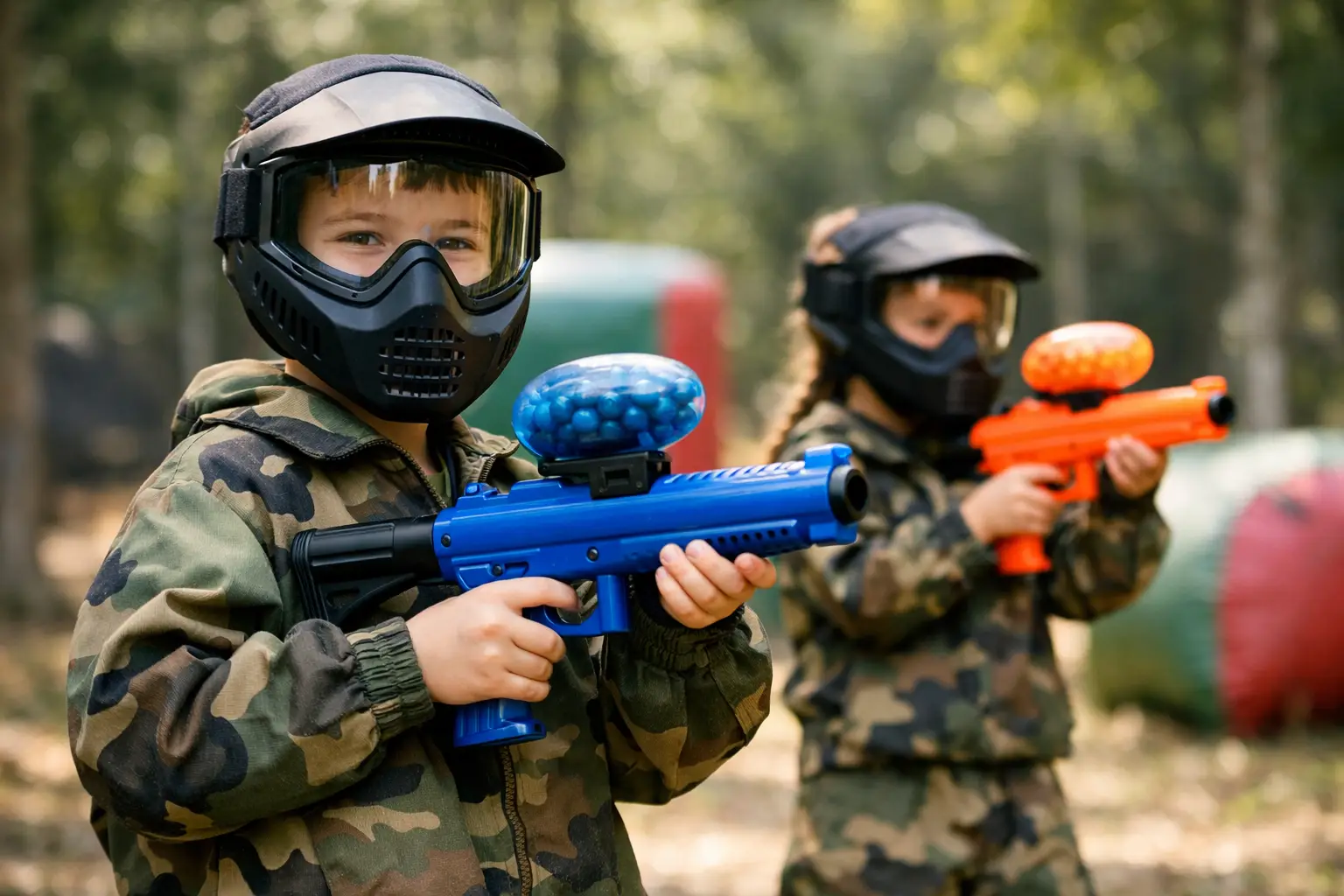
If you are planning a birthday party or group day out, one question comes up fast – what age is Splatmaster suitable for? The short answer is that Splatmaster is generally designed for younger players, typically from age 8 and over, but the best fit depends on the venue, the child’s confidence and the type of session you want to book.
That age range is exactly why Splatmaster has become such a popular choice for families who want the thrill of paintball without jumping straight into the full-strength version. It delivers the same team game feel, the same mission-based excitement and the same rush of racing through outdoor game zones, just in a format that is more accessible for younger players.
What age is Splatmaster usually for?
Splatmaster is most commonly aimed at children aged 8 to 12, although some older kids enjoy it too, especially if they are trying action games for the first time. It sits neatly between soft introductory activities and standard paintball, giving younger players a proper tactical experience without the intensity that comes with traditional paintball markers.
For parents, that middle ground is the real selling point. Children still get the buzz of competing, hiding behind barriers and working together to complete objectives, but in a controlled setup built around younger age groups. That makes it ideal for birthdays, school groups and family events where you want the day to feel exciting rather than overwhelming.
The exact minimum age can vary by operator, so it is always worth checking the venue’s rules before booking. In the UK, age policies are often tied to insurance, equipment type and how the activity is managed on site. If you are asking what age is Splatmaster for your child specifically, the answer is not just about the number. It is also about whether they are ready to listen to safety briefings, follow instructions and enjoy the game as part of a team.
Why Splatmaster works for younger players
The biggest reason Splatmaster suits younger children is that the equipment is designed to be lighter, lower impact and easier to handle than standard paintball gear. That matters more than many first-time bookers realise.
A child’s first action game can go one of two ways. If the format feels too intense, they may spend the day hanging back and feeling unsure. If the activity is pitched at the right level, they usually throw themselves into it, build confidence quickly and come away desperate to do it again.
Splatmaster gets that balance right. The gameplay still feels action-packed, but it is structured for beginners and younger age groups. That means children can focus on the fun part – aiming, moving, communicating and competing – without feeling out of their depth.
There is also a social side that parents and group organisers tend to value. At this age, children often enjoy activities most when everyone can join in together. Splatmaster is great for mixed-ability groups because it does not rely on strength or previous experience. A child who has never tried anything tactical before can still get stuck in and have a brilliant time.
Is 7 too young? Is 13 too old?
This is where the answer becomes a bit more nuanced.
A confident 7-year-old might seem ready in every way, but if a venue’s minimum age is 8, that policy is there for a reason and should be followed. Safety rules are not flexible extras. They are part of what makes organised activity days work well.
At the other end, 13 is not automatically too old for Splatmaster. Some 13-year-olds still love it, especially if they are attending a mixed-age party or are new to this kind of activity. Others may be more interested in stepping up to standard paintball, depending on the venue rules and what sort of challenge they want.
So if you are wondering what age is Splatmaster best for, think of 8 to 12 as the sweet spot rather than a hard ceiling. Older children can still enjoy it. Younger children may need to wait until they meet the venue’s minimum age.
How to tell if your child is ready
Age matters, but maturity matters too. Two children of the same age can have completely different first experiences depending on confidence levels and how they respond in group settings.
A child is usually ready for Splatmaster if they are comfortable being active outdoors, happy to wear safety gear and able to listen during a briefing without losing focus. They do not need to be sporty. They do not need perfect aim either. They just need enough confidence to join in and enough concentration to follow instructions from the marshals.
If your child already enjoys nerf-style games, laser tag, obstacle activities or team sports, that is often a good sign. They are likely to enjoy the fast pace and teamwork. If they are more cautious, that does not rule Splatmaster out, but it may help to talk them through what to expect beforehand so nothing feels unfamiliar on the day.
Parents sometimes worry about whether their child will find it too competitive. In reality, well-run Splatmaster sessions are usually less about pressure and more about shared fun. The best venues keep the atmosphere upbeat, supervised and friendly, which makes a huge difference for younger groups.
Splatmaster vs paintball for age suitability
If you are comparing activities, this is where the distinction matters.
Splatmaster is built for younger players and first-timers. Standard paintball is usually for older participants and offers a more intense experience. That does not make one better than the other. It simply means they suit different age groups and different occasions.
For an 8th, 9th or 10th birthday party, Splatmaster often makes more sense because the equipment and gameplay are designed with those players in mind. For teenagers looking for a bigger adrenaline hit, paintball may be the better fit if they meet the minimum age at that venue.
That is why booking the right format matters. Go too advanced too soon and some players may feel nervous. Go too gentle for an older thrill-seeking group and they may want more challenge. The strongest choice is the one that matches the group, not just the activity name.
Safety and supervision matter as much as age
When parents search what age is Splatmaster, they are usually asking another question underneath it – is it safe?
That is the right question to ask. Age suitability is only one part of the picture. A professionally run session should include a full safety briefing, supervised games, appropriate protective equipment and marshals who know how to manage younger groups properly.
That environment is what turns an action game into a family-friendly day out. Good venues do not just hand over equipment and hope for the best. They structure the session, keep games controlled and make sure players understand the rules before anything starts.
This is especially important for birthday groups, where you may have a mix of personalities and confidence levels. Some children will charge forward straight away. Others will need a bit of encouragement. Experienced staff know how to handle both.
Booking for a party or group day
If you are organising an event, the easiest approach is to start with the group’s age range and work backwards. If most players are around 8 to 12, Splatmaster is often the obvious fit. It gives children a genuine adventure without pushing them into something too advanced for their stage.
It also works brilliantly for parents because it is easy to understand. You are booking a structured activity, not trying to invent entertainment from scratch. The session is organised, the games are ready to go and the experience feels like a proper event rather than just an hour of running about.
That matters when you are trying to keep a group engaged. Children want action. Parents want simplicity, safety and a package that delivers. Splatmaster tends to tick all three boxes.
If your group includes siblings or friends at slightly different ages, it is worth speaking to the venue before you book. They can usually advise whether Splatmaster is the best match or whether another format would suit the group better.
So, what age is Splatmaster really right for?
The clearest answer is this: Splatmaster is usually right for children aged 8 and over, with 8 to 12 being the most common age range. But the best choice depends on the child, the group and the venue’s own rules.
If you want a high-energy, tactical activity that feels adventurous without being too full-on, it is a brilliant option for younger players. It gives children the excitement of a proper battle game in a format built around fun, confidence and safety.
Ready to plan an action-packed day out?
If you are booking for a birthday, school group or family event, now is a great time to Book Paintball Near You or Find Your Nearest Venue. With professionally run sessions, first-class facilities and friendly staff on hand, it is easy to choose the right activity and give your group a day they will be talking about long after the last game ends.
The right age is only the start – the real win is finding an experience that makes every player want one more round.